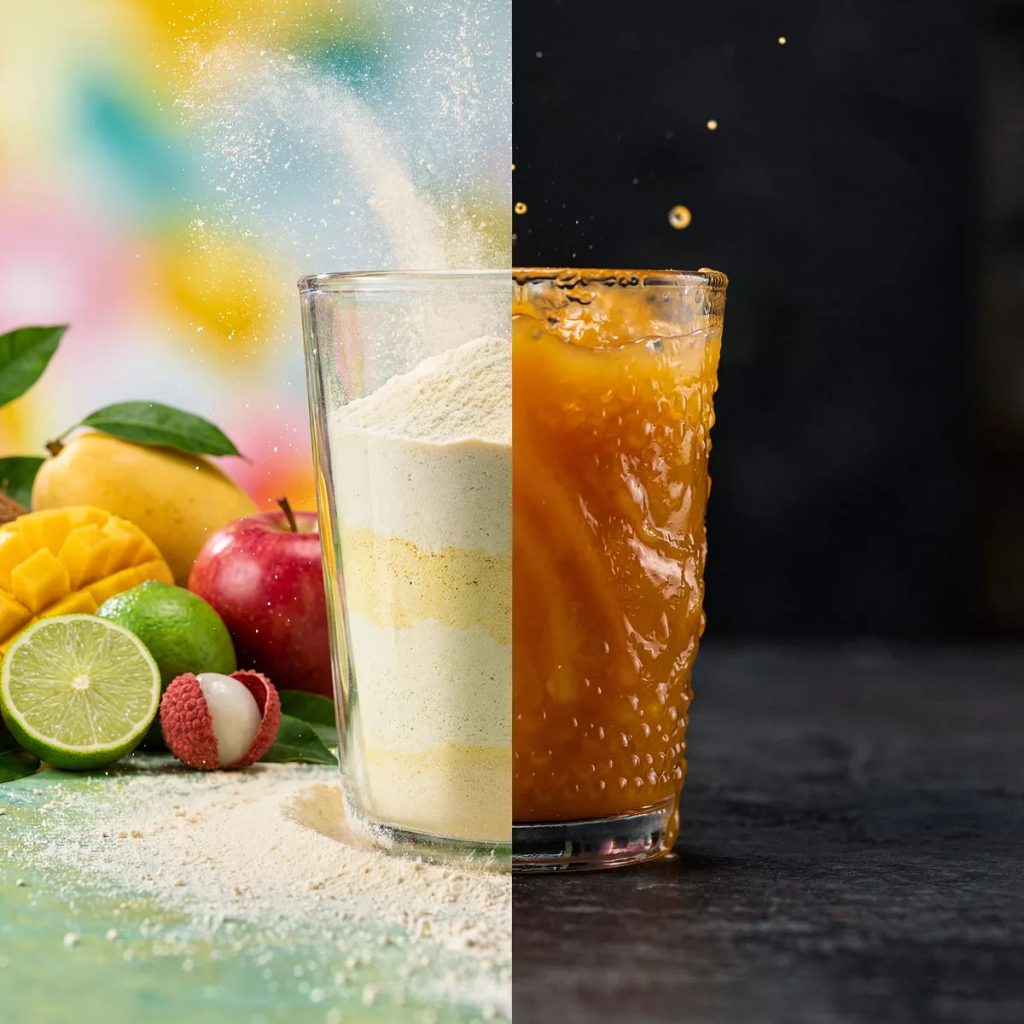
Powder vs. Concentrate:
What’s the Real Difference for Foodservice?
Powdered products, like orange powder or instant fruit drink powder are created via spray drying, a gentle process that turns liquid into powder while preserving flavor, aroma, color, and nutritional value. The result: cleaner labels, longer shelf life, and tighter quality control from factory to final glass. Powders are easy to store, simple to prepare, and highly versatile across beverage and culinary applications.
Operator Benefits (Powder)
– Consistency at scale across locations and shifts
– Shelf-stable with no cold chain needed (space-efficient)
– Fast prep, just add water or blend into recipes
– Menu versatility, ideal for Italian sodas, smoothies, mocktails, desserts, bakery, and more
– Predictable yield for better cost control
Concentrate: Intense Liquid with Stability Needs
Concentrates are liquid bases with water removed to boost intensity. To remain stable, many formulas require stabilizers, colorings, or preservatives, which may impact the perception of naturalness and limit flexibility in some production or menu formats (e.g., heat, freeze/thaw, or specific textures).
Potential Limitations (Concentrate)
– Cold chain or strict storage often required
– Added stabilizers more common in liquid formats
– Heavier packaging and more spill risk
– Less flexible for certain recipes or batching workflows
When to Use What?
– Powder: Standardized taste across high-volume service, multi-site operations, limited cold storage, diversified menus.
– Concentrate: Specific systems already built for liquid dosing, or where a particular liquid workflow is mandated.
The Takeaway
If you want natural taste, operational ease, and consistent quality across multiple beverage and menu uses, powder is the cleaner, more versatile choice for modern foodservice.